

- On August 7, 2026
- 0
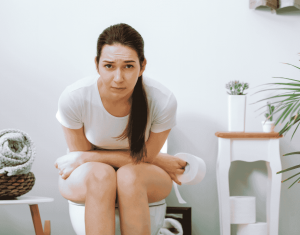 If you’ve been dealing with constipation for months (or years) and nothing seems to fully resolve it — more fibre, more water, more laxatives, and still no relief — the missing piece might not be your diet at all. It might be your pelvic floor.
Constipation is often treated as a purely digestive issue, but for many people it’s actually a muscular coordination problem. Understanding how the pelvic floor works, and how it can go wrong, is the first step toward lasting relief.
What Is the Pelvic Floor, Anyway?
The pelvic floor is a group of muscles and connective tissue that stretches like a hammock across the bottom of your pelvis. It supports your bladder, uterus (or prostate), and rectum, and it plays a key role in three major functions: continence, sexual function, and — relevant here — bowel movements.
For a bowel movement to happen smoothly, your pelvic floor muscles (including the puborectalis muscle, which loops around the rectum) need to relax and lengthen at exactly the right moment, while your abdominal muscles gently bear down. It’s a coordinated, almost athletic movement. When that coordination breaks down, constipation follows, even if everything else about your digestion is working fine.
How Pelvic Floor Dysfunction Causes Constipation
There are a few common patterns:
- Pelvic floor dyssynergia (paradoxical contraction)
- Instead of relaxing during a bowel movement, the pelvic floor muscles tighten or contract — essentially working against you. This is one of the most common and most overlooked causes of chronic constipation, and it’s frequently mistaken for “just slow digestion.”
- Pelvic floor tension or tightness
- Chronically tight or overactive pelvic floor muscles (sometimes linked to stress, past injury, surgery, or childbirth) can make it physically harder for stool to pass, even when there’s no true blockage.
- Weakness or poor coordination
- On the other end of the spectrum, weak or poorly coordinated pelvic floor muscles may not generate enough support to help evacuate stool effectively, leading to straining, incomplete emptying, and a frustrating cycle of pushing harder, which can make things worse over time.
- Rectal prolapse or rectocele
- Structural changes, such as a rectocele (a bulge of the rectal wall into the vaginal wall) or mild rectal prolapse, can trap stool and prevent complete emptying. These are more common after childbirth or with chronic straining.
Signs Your Constipation Might Be Pelvic Floor Related
- You feel like you need to go, but can’t fully empty
- You strain frequently, even with soft stool
- You feel a sense of blockage or obstruction during a bowel movement
- You’ve tried increasing fibre and water with little to no improvement
- You need to use your fingers to help evacuate (splinting)
- You have a history of straining, childbirth, pelvic surgery, or chronic stress
- Sitting for long bowel movements or feeling like stool is “stuck” is a regular occurrence
If several of these sound familiar, it’s worth having your pelvic floor assessed — not just your diet.
How Pelvic Floor Physiotherapy Helps
This is where pelvic floor physiotherapy comes in. A pelvic floor physiotherapist is trained to assess how your pelvic floor muscles are actually functioning, not just guess based on symptoms. Treatment might include:
- Biofeedback training to help you learn to relax the pelvic floor appropriately during a bowel movement
- Manual therapy to release chronic tension or trigger points in the pelvic floor muscles
- Breathing and bearing-down mechanics to reduce unnecessary straining
- Positioning strategies (yes, the way you sit on the toilet actually matters — a footstool can make a real difference)
- Core and pelvic floor coordination exercises tailored to your specific pattern of dysfunction
Unlike general bowel advice, this approach treats the mechanism behind the constipation, not just the symptom. Many people are surprised to learn how much relief is possible once the muscular piece of the puzzle is addressed.
You Don’t Have to Just Live With It
Chronic constipation can be exhausting, embarrassing, and easy to normalize simply because it’s so common. But “common” doesn’t mean it’s something you have to manage forever with trial and error. If diet and lifestyle changes haven’t fully solved the problem, a pelvic floor assessment can uncover what’s really going on, and give you a clear, targeted path forward.
If you’re in Kingston, ON, and chronic constipation, straining, or a sense of incomplete emptying has been affecting your quality of life, we’d love to help. Book an appointment with our pelvic floor physiotherapist today, and let’s get to the root of what’s going on, so you can feel confident and comfortable again.
0 comments on The Pelvic Floor – Constipation Connection: What You Need to Know